

The Stunning Low-Maintenance Flower You May Want To Reconsider Planting In Your Garden
We may receive a commission on purchases made from links.
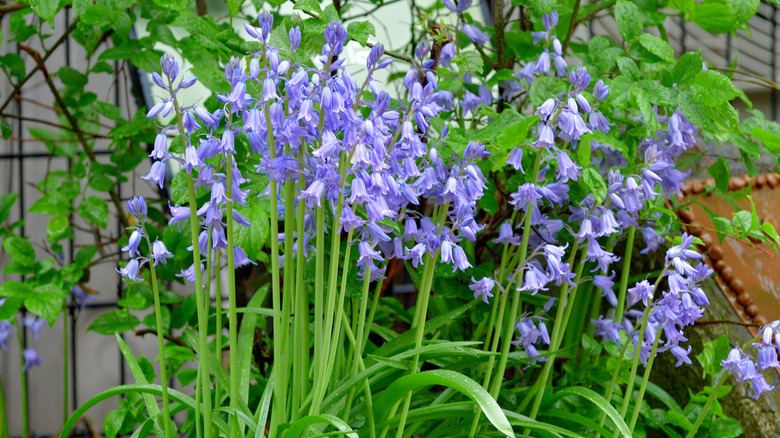
With their lavender-colored, bell-shaped blooms, Spanish bluebells have become popular throughout many areas of the U.S. The fact that they are easy to grow and relatively low maintenance add to their popularity. However, they are not native to the U.S. They actually originate in the Iberian Peninsula — Spain and Portugal — and the northwest portion of the African continent. They are a perennial that you plant once but will never leave your garden, which is where part of the rub comes in. Like common comfrey, Spanish bluebells are a beautiful but invasive flower. They are known to outmuscle native plants and can easily take over entire areas.
Although they can be damaging to other garden inhabitants, there are benefits to Spanish bluebells as well. In addition to their casually elegant appearance, they are a pollinator-friendly flower that helps ensure bees come buzzing to your garden. Additionally, they can be grown in shade-prone areas where other plants stubbornly refuse to flourish. As a result, many gardeners still choose to add them to their flowering array, despite the potential pitfalls and the fact they can extremely difficult to eradicate.
How to keep Spanish bluebells from taking over your garden
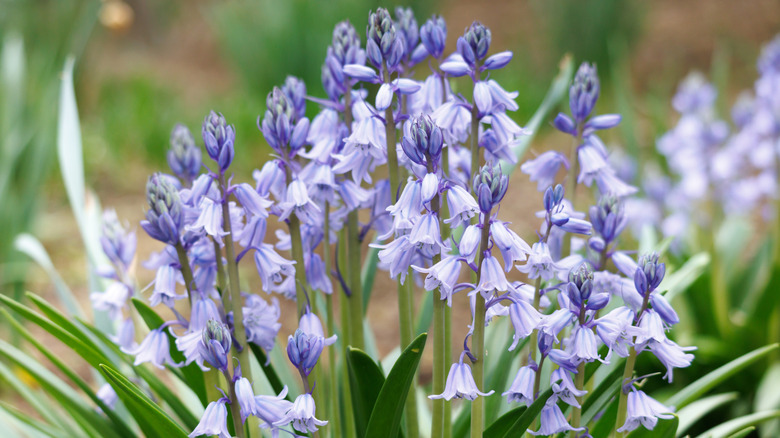
Although Spanish bluebells are considered a low-maintenance flower, keeping them from spreading, on the other hand, takes a bit of effort. But, whether you already have them in your garden or are thinking of planting some, there are steps you can take to keep them from dominating your other plants. According to The Spruce, one of the best ways to prevent the unwanted propagation of these plants is to dig up and replant the new bulbs every couple years or as necessary. Be sure to use a long blade shovel, such as the Ashman Drain Spade, in order to get ample depth and remove as much of the root as possible when digging up bulbs.
If you are looking to completely remove Spanish bluebells from your garden, dig up all of the bulbs and runners. Dispose of them in a plastic bag or garden waste disposal collection. Do not compost them or toss them elsewhere in the yard, as this will only cause them to sprout in new locations. Because of the persistent nature of Spanish bluebells, it is likely you will need to continue removing new bulbs for several years in order to completely eradicate them.
A possible compromise for growing Spanish bluebells without worrying about their invasive qualities is to plant them in containers. However, if you do opt to use containers, be aware of the negative impacts of temperature extremes during summer and fall. To help minimize the effect, use the largest pot that is practical, as that will allow the bulbs to be surrounded by more soil. You should also move the containers indoors during peak heat or drastic drops in temperature.