

Avoid These Mistakes When Prepping Your Soil For Grass Seed
We may receive a commission on purchases made from links.
If you've decided to upgrade the grass in your yard, there are a few things you need to do to successfully sow grass seeds and ensure your efforts result in a lush, green lawn. This applies whether you are creating an entirely new lawn or if it's simply time to overseed your existing one. While choosing the right grass seed for your lawn is critical and pre-germinating grass seeds can help, proper preparation of the soil is also required. From ignoring the pH balance to overlooking weeds, it's important to avoid these mistakes when prepping your soil for grass seed.
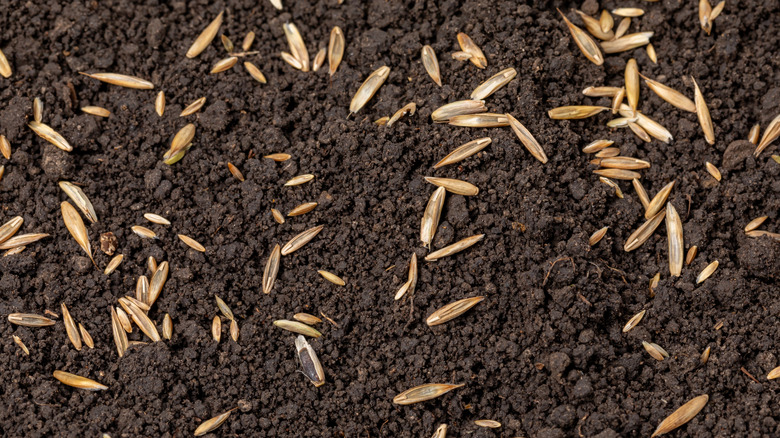
One of the most common mistakes actually occurs at the end of the process. Whether soil is properly prepped or not, if the seeds are buried too deep beneath it, they will not germinate properly nor sprout. The majority of grass seeds need only a light covering of soil to protect them from birds and keep them sufficiently warm and moist. Seeds should be buried beneath no more than a quarter-inch of soil. An easy way to make sure seeds are not buried too deep is to sprinkle them over the ground then lightly sweep them into the soil with a broom.
While that common mistake happens at the end of the process, there are several other pitfalls to avoid starting at the very beginning. So, as you begin preparing your lawn, you first need to visually survey it, paying particular attention to any low spots or areas with poor drainage. Add soil to any trouble spots and adjust the grade as necessary to ensure the lawn will drain properly once planted. However, use caution not to create too steep of a grade, as this will lead to soil drying too quickly.
Ignoring thatch and weeds can cause big problems
In order for grass seeds to be successfully sown, they must be able to be in contact with the soil. If you are starting a lawn from scratch or fully converting your yard to newly seeded grass, you should first clear the soil of any existing grass — and weeds. A sod cutter like the ChezMax Weed Puller Tool can remove both sod and weeds by the roots. You can also utilize herbicidal spray for clearing out the old grass and weeds on your lawn site. However, if you go that route, you will need to go through a waiting period before seeding the soil, lest the newly sown seeds will fall to the herbicide as well.
Herbicide can also be used to spot spray weeds popping up in bare soil areas. However, unless there is a large weed infestation, it is typically faster and more efficient to hand-pull weeds. In either instance, be sure to completely kill or remove the weed by the root. If this is not done, the weeds will recur and cause continuing problems once your new lawn sprouts as well.
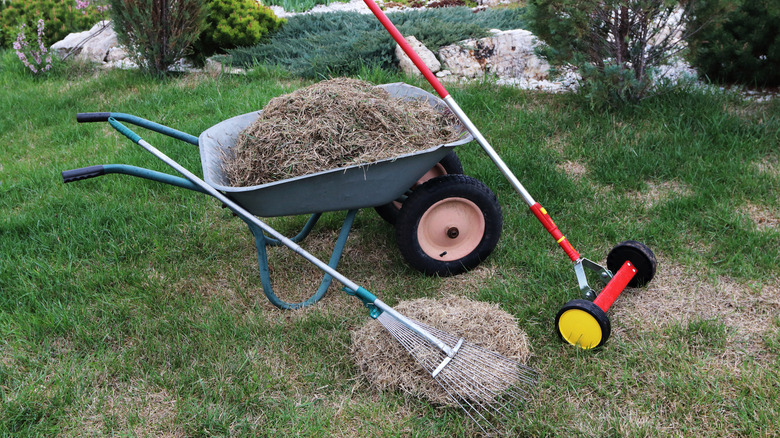
When overseeding or filling bare spots in an existing lawn, thatch can also cause quite a problem. Thatch, which is an accumulation of dead grass and other decaying organic matter, can form into a dense layer across the top of the soil. If it is not removed, the seeds will not contact the soil, rather, they will sit atop the thatch, where they will not be able to sprout. Therefore, it is important to dethatch these areas with a tool such as a Workpro Thatch Rake.
Not testing and watering the soil can reduce seeding success

Besides just clearing the soil, it is important to make sure that it also has the proper pH level, along with adequate nutrients and moisture to allow grass seeds to successfully sprout. Start that process by testing your soil's pH level. While most types of lawn grasses do well in soil with a pH level in the range of 6.0 – 7.5, it is important to verify the ideal pH level for the specific grass seed you are sowing. If your soil isn't in the appropriate range, you should adjust it by adding sulfur if the soil leans to the high, or alkaline, side or lime if it is too acidic, or low pH.
However, the proper pH alone isn't enough to ensure a healthy lawn. The soil also needs adequate nutrients and moisture. Utilizing the information from the soil test, you can determine what, if any, fertilizer is necessary. You should also water the soil prior to planting so that it has the moisture content necessary to assist the seeds in the germination process. Watering should continue after the seeds are sown, however it is important to avoid overwatering.
In addition to making sure the pH, nutrient, and moisture levels are adequate, loosening the soil before planting can help ensure success. You can use a tiller, spade, hoe, or aeration spikes to accomplish this task. This will not only help the seeds during germination, it will also aid in the drainage of the soil. Once the soil has been loosened, it should be smoothed. Any large clogs, clumps, or rocks should be moved, leaving a leveled layer of loose topsoil.